It is an excuse for a tasty lunch. We justify the true goal of the day, trying a new (to us) restaurant, with the appearance of culture. Living in the suburbs of Dallas, it is not a huge ordeal to trek into the city and enjoy the resources available to us. Even better, we will share a simple stress free outing with you.
Sleep in on a Saturday morning, since the Dallas Museum of Art does not open until eleven. Knowing a decent lunch awaits, we curtail our breakfast bounty and read the paper curled around a bowl of cereal. It is a gorgeous clear, sunny day with a hint of fall in the air. Dressed in sturdy walking shoes and casual wear, we drive the twenty miles into the city. Downtown Dallas on a Saturday morning is not teeming with life. The Arts District off of Pearl Street is just waking up and we easily find a meter to plunk in a few quarters. It is silly to pay the full day parking lot rate, when we plan to browse and then bolt for lunch.
There are some families and students waiting for the doors to open and we join the group to pay the ten dollars admission fee. We find our name on the docent tour list and end up with a private tour. Now, the docent tour was a bit of a bonus. My friend had won a silent auction bid a year ago and the tour was expiring. Even with a month's notice, friends and family were too busy to join in the festivities. Hence, it was the two of us. The docent tours can be arranged privately or there is a free public tour at two o'clock daily.
The tour is a pleasant surprise and gives us a new perspective of the museum. Rather than a seemingly random hodge-podge of art, there is a flow to the building and the docent guides us to a starting point upstairs. As we walk up the steps we enjoy the glass sculpture in the window of the art café. Flowers or sea creature creations, the bright glass glistens and allows the imagination to wander. An added bonus from the second floor is a view into the Nasher Sculpture Center next door. This is a year old cultural coup for the city of Dallas. Raymond Nasher donated his collection to the city, as well as actively participating in the building and presentation of his sculptures. The Nasher Center is a possible side trip depending on your art ambition for a day.
Our docent begins in the early American galleries and proceeds to stop and discuss various favorites and newly acquired pieces. As we proceed, we get a mixture of opinion, art history, and technique. With a different view and some lively discussion, we enjoy our stroll through the Dallas art galleries. We sit in front of Frederick Church's The Iceberg to rest our feet. The Dallas Museum of Art has a wide-ranging collection from American to African art, from classical to modern. A few hours here can enlighten young minds or invigorate the old. Constantly changing and rearranging the art on the walls, the museum wants you to return to see old favorites in new settings or to enjoy new works. It is easy to take the museum for granted, but an occasional visit is refreshing.
After two hours, we thank our guide and proceed to lunch. A short drive from the arts district, McKinney Avenue offers a variety of funky stores, trendy clubs, and fabulous eateries. We head to Cretia's on McKinney , a bistro and bakery. At one in the afternoon it has a decent crowd, and with the gorgeous weather, the patio seating is full of patrons. The menu does not disappoint with choice of lunch or weekend brunch items. We chose the chicken croissant sandwich and the hot roast beef sandwich. The lunches come with salad choices, fries, or fruits. Save room for dessert because the bakery section of this establishment is wonderful. We savored carrot cake with real cream cheese frosting and a red velvet cheesecake that was melt- in- the mouth delicious. Cretia's proves to be an enjoyable reward for our dose of art culture.
To burn off a few calories, we finish the afternoon with a stroll up McKinney to the Knox shopping area. Unique specialty shops and popular stores such as Pottery Barn and Crate and Barrel line the streets. Shop, people watch, or plan the next outing complete with a restaurant choice on McKinney. This is one little section of Dallas and the Dallas Museum of Art is only one of many museums to see. Take the time to enjoy some art and lunch.
Dallas Museum of Art Arts District
Cretia's 4438 McKinney Ave Dallas Texas 75205
Wednesday, March 16, 2011
Enjoy an Art Museum, Docent Tour, and Lunch in a Day Trip

Making Movies for the 48 Hour Film Festival
So you fancy yourself a filmmaker, but you don't know how to get yourself known? Are you just a great big hulking load of moviemaking talent looking for the opportunity to present yourself as an alternative to the constant stream of dreck that Hollywood keeps forcing down our throats? Or hey, maybe you are one of those unfortunate types who thinks that Hollywood has finally hit its stride and you want to showcase your talent by jumping headlong into the great big pool of mediocrity that is American film today.
The Blair Witch Project pretty much changed everything for independent film. The profit that film made proved that no matter how crappy a film you actually make, as long as you can make it as cheaply as possible and turn a big profit, then you will get noticed. And DV technology has brought that ability to make a film with a ridiculously small budget into the home of every wannabe Spielberg alive today.
But just because you can make a cheap film is no guarantee that anybody but your friends and family will see it. Until now, that is. A trio of guys living in LA has made it possible for anyone reading this article in even the most remote village in Croatia to have their eight minute masterpiece potentially viewed by movers and shakers in the business.
And by the business, of course, I mean the industry.
The 48 Hour Film Festival is the brainchild of Mark Kochinski, Keith Matz and John Parenteau. All three are involved in the film industry in various ways and all three have long dreamed of being filmmakers themselves. One day while sitting around bemoaning the state of the industry and how things were going to be different once they start making those dreams inside their heads come to life on celluloid, Matz casually mentioned that a friend of his had entered a one day filmmaking contest. By the end of the day the gauntlet had been thrown down and Kochinski and Matz-along with three others-spent the weekend making a movie to see who could do it best within a strict 48 hour time frame. Although by Kochinski's own admission all five of the films were less than spectacular, lightning had struck and history was born. Interestingly enough, if you just change the names, that story also details exactly how the Academy Awards was born. Go figure.
The budding film revolutionaries held a screening of those famously bad two day movies and much in the way that most people who ever actually attended a Sex Pistols concert wound up starting their own bands, those people who watched those movied wanted in on the action and demanded another two day film festival in which to showcase their own visions. Three months later enough participants had submitted a film that the renting of a screening room was required. Which immediately sold out. It probably goes without saying that most of those attending that screening also wanted a shot. It didn't take a psychic to see where this was heading.
At that point John Parenteau was brought it to help develop an actual film festival. First the trio founded ExtremeFilmmaker.Com. The first order of business was to get in touch with the other similar concepts around the country and make sure nobody's toes were being stepped on. After all, America is a litigious country if it is nothing else. After that potential mess was rooted out, the 48 Hour Film Festival was born.
The rules are simple. And they can be found at ExtremeFilmmaker.com if you want all the details, but the basics are these: All movies must be filmed from the first shot to the final edit within a 48 hour time period. Film can be no longer than eight minutes, though certain exceptions are made in the case of extraordinarily well-made movies. And by extraordinary, they mean it. The content cannot be considered deserving of a hard R or NC-17 or XXX rating. All preproduction efforts, including screenwriting, are exempt from the 48 hour time limit.
The first big time 48 Hour Film Festival was held at the Chaplin Theater at Raleigh Studios, a 150 seat venue that soon proved too small for the growing audience eager to attend. Currently, the festival is presented at the Arclight Theater on Sunset Blvd. All proceeds go to the Starbright Foundation.
The ExtremeFilmmaker web site not only gives all the pertinent information regarding the 48 Hour Film Festival, but provides a wealth of information for budding filmmakers. Be sure to sign up for the newsletter so you can keep up to date on the 48 Hour Film Festival updates. Also included on the site are guides for picking the right equipment and the right software for editing your masterpiece. In addition, you will find fabulous tips on the actual process of making a movie; for instance, such things as framing, lighting, and using the camera itself as an actor are covered.
Perhaps nothing is a better teacher of how to make a film than watching a film. Heck, there's no perhaps about it. You can read all the theory you want and listen to all the seminars and read every word ever written about film from DW Griffith to Quentin Tarantino, but if you haven't watched a lot of movies, you can't hope to make an original movie. It has been said that Orson Welles prepared to make Citizen Kane by watching Stagecoach dozens of times. Although the story is probably apocryphal, the idea has merit. If you don't watch a lot of movies you can't make movies. (Which, of course, is going to present some heavy duty problems to the next generation of filmmakers who, instead of being exposed to daily doses of Hawks, Welles, Ford and Stevens are instead being treated to three showings on three straight nights of You've Got Mail on TNT and nothing but James Bond movies for a whole week on American Movie Classics.)
But I digress.
The point is that if you really want to learn what it takes to make a 48 hour movie, then you should check out what has been submitted before. And the site makes that possible by listing many of the best submissions according to the festival in which they were shown. This is your classroom. Watch these films and learn. And then grab your camera and go out and make your own and, who knows, you just may find your own flick available for download.
Lest you think this is all just an exercise in wishful thinking and that nobody is ever going to get noticed by making a movie in 48 hours, consider that no less a proponent of independent film and the digital revolution than writer-composer-editor-director Robert Rodriguez (Once Upon A Time In Mexico) took notice of the 48 Hour Film Festival and asserted that it represents the very essence of independent filmmaking.
Once upon a time, Cannes was just a beach where women walked around topless. Once upon a time Sundance was just the quiet guy in a funny western movie. Right now the 48 Hour Film Festival is taking place inside a 450 seat venue.
Once upon a time it took place inside a small room at a special effects house.
Five Great Art Deco Buildings in Los Angeles

here
Los Angeles is not known for any one architectural style in particular. It is a city that contains modern glass curtain skyscrapers and buildings that look like giant hot dogs. But Los Angeles does have several of the best example of the Art Deco architectural style to be found anywhere. Here is a guide to some of these sites not to be missed.
Pasadena City College, 1570 East Colorado Blvd., Pasadena
After an earthquake in 1933, building codes in California were updated to prevent structural damage from these inevitable natural shakes. Pasadena Junior College, as it was known then, had to shut down its three major buildings for restructuring compliance. These buildings had been named after early 20th century notables: Horace Mann, a social engineer attributed with conceiving the plan for our modern education system; Jane Addams, a proponent of the women's suffrage movement and co-recipient of the 1931 Nobel Peace Prize, and; Dr. Louis Agassiz, a Harvard naturalist who proved the earth had an Ice Age. None of these notables had any particular connection to Pasadena, or Los Angeles, for that matter. When the school rededicated its buildings in 1937, it renamed these structures with the bland labels of Buildings C, D and E. The campus may have lost some names, but it gained a dramatic new quad area. With the help of funding from the Federal Administration of Public Works, Pasadena City College blossomed into an impressive Art Deco site which is still in evidence today. The three main buildings are made even more impressive by the campus reflecting pools, or "mirror ponds" as the school refers to them. This quad area makes a perfect photo opportunity.
Oviatt Building, 617 S. Olive Street, Los Angeles
This opulent structure was built in 1927 by the architectural firm of Walker & Eisen as the headquarters of Alexander & Oviatt, a high-end haberdashery of the day. It was topped by a luxurious penthouse for owner James Oviatt. It is reported that the forecourt of the lobby contained over 30 tons of glasswork by the famous French designer Rene Lalique. Features such as the mailboxes, directory signs and elevator doors were custom created by Lalique. Most of the glasswork has been sold, demolished or lost over the years. But some of the original work remains, especially at the lobby column topping panels. The original Alexander & Oviatt retail space has seen several incarnations of restaurants over the years, but still has the amazing Art Deco ceiling, fixtures and stair rails. Mr. Oviatt's penthouse was a shrine to Art Deco. It also dripped in Lalique glasswork and featured geometric parquet inlaid wood floors. It was known for its terrace gardens, tennis courts, pool and artificial beach with imported sand and palm trees. A great neon clock tower rises above the penthouse area, reminding us that the time of such meticulously crafted architecture has come and gone.
Eastern Columbia Building, 849 S. Broadway, Los Angeles
Perhaps the most prominent clock in the downtown Los Angeles area is the four-faced clock on the tower of the Eastern Columbia Building in the Broadway Theater District. This monument to Art Deco was built in 1930 by architect Claud Beelman for Adolph Sieroty, who is not exactly a household name in Los Angeles today, but was the largest retailer of his time. Sieroty owned both the Eastern Outfitting Company and the Columbia Outfitting Company, selling furnishings, appliances and clothing. This building served as dual headquarters, with each company occupying opposite sides of the structure. The structure is distinctive for its glossy turquoise colored terra cotta cladding and gold leaf detailing. Art Deco motifs abound, with chevrons, stylized plants, zigzags and sunburst patterns. Originally, the building was meant to accommodate mixed use, with office space above a retail pedestrian arcade. Sieroty's son remodeled in 1956 to pure office space. The building experienced refurbishing in the 1980s, and is currently being convered to accommodate residential units.
Southern California Edison Company Building, 601 W. 5th Street, Los Angeles
Everything about this building says it it the home of a major utility company. The entrance to the limestone and terra cotta structure features Art Deco friezes of allegorical figures rendered by sculptor Merrell Gage in symbolic representation of light, power and hydroelectric energy. Inside the lobby, a huge mural by Hugo Ballin tells the story of the Edison Company as the alchemist that magically turns water into power. It is titled "The Apotheosis of Power." The dramatic punch of this structure has been watered down by the addition of a shopping corridor in the 1990s, but enough of the original remains to deserve a visit.
Bullocks-Wilshire Department Store, 3050 Wilshire Blvd., Los Angeles
It is more accurate to refer to this site as the Southwestern University School of Law, as that is the new proprietor. Although the building no longer serves as a retail store, it is alive and well as the university's law library and administrative offices. It is such adaptive reuse that saved Bullocks from possible demolition and oblivion. What a loss it would have been. This outstanding example of Art Deco was designed by architects John and Donald Parkinson in 1928. It was one of the first businesses to recognize the rise of automobile traffic over pedestrian traffic. In order to accommodate, the floorplan in essence turned its back on Wilshire Blvd. and opened its portals to the parking lot on the reverse side of the building. It is on that side you will find the grand porte cochere featuring a gorgeous fresco on the ceiling by Herman Sachs paying tribute to modern modes of transportation. A dominant aspect of the Bullocks building is the 241 foot tower rising from the north fascade. This outstanding structure rests on a black marble base and has copper spandrels and chevron details between tan colored terra cotta. The copper has oxidized to a rich green, giving the whole structure a sophisticated patina.
Friday, March 4, 2011
Free Baby Products and Coupons for New Parents

baby seats australia
When I was pregnant with my first child, another mother advised me to sign up for newsletters and other mailings from companies that sell baby products. Later that day, I signed online and joined just about everyone mailing list I could find for baby care products. To be honest, I expect booklets and tips on how to successfully raise a child, but I received tons of samples and coupons for baby formula, food, diapers, and much more. I joined many of these mailing lists before my daughter was even born and over eighteen months later I am still receiving valuable coupons in the mail.
Below is a quick summary and list of company websites that may provide new mothers with coupons and sometimes products. On most questionnaires, you will have to enter in your name, age, address, information about your pregnancy, and your child's birth date or expected due date. It is important to enter in the correct information pertaining to your child's birth because many of these companies will send you coupons pertaining to the stage they are currently in.
Pampers is one of the most well known diaper brands among parents. Their website is at www.pampers.com. When you first arrive at their web page, you will be required to select your country and once you arrive on the following page, click on the link that mentions free coupons and samples. To join the Pampers Club, you must also pick a sign on name and password information. When my daughter was younger, Pampers would constantly send me coupons for baby wipes and diapers. Whenever she reached a new stage, Pampers would also include a sample diaper to try. Pampers is still sending coupons to my home and they generally arrive once a month.
One of the other well known diapers brands is Huggies. In addition to diapers and baby wipes, Huggies also has a line of bath care products for infants and toddlers. The company website is www.huggies.com. When you arrive at this web page, you will also have to select your country and when on the next page, select the "Happy Baby" link. Once you are in that section, select the tab at the top of the page labeled "Special Offers." When you are joining the Huggies mailing list, you will have to create a website screen name and password, allowing for easy return to the site. I generally receive coupons from Huggies about once every one or two months. Huggies will also send coupons for all of their products and they try and correspond them with your child's age.
Nestle produces various different types of baby formulas. The Nestle brand formula is formally known as Carnation. My daughter always had the Nestle Good Start Supreme formula and luckily Nestle is one of the best formula companies to receive samples and coupons from. Their company web page is http://www.verybestbaby.com. On their main page, you must sign up for the very best baby collection. Before my daughter even arrived, I had a free normal size can of Nestle Good Start formula. Later on I received a free baby book with stickers and tons of checks for formula. Nestle sends checks that are similar to coupons; however, they have your name on them and are good for formula at any retail store that sells it. The first three checks that I received actually covered one normal size can of formal from Nestle, you can't beat free formula! As your child develops the check size will decrease and when the standard child is off of baby formula, you will no longer receive mailings from Nestle.
When your infant is ready for baby food, Gerber and Beechnut are popular brands that many parents purchase. By visiting www.beechnut.com, parents can often times receive a free product from joining their newsletters and there are sometimes coupons to print off their website. With many supermarkets choosing to no longer accept printed internet coupons, www.gerber.com is the way to go. Gerber offers healthy baby food for children, finger foods for infants and toddlers, and Gerber Graduate Meals for toddlers. When you arrive at Gerber's home page, select the special offers tab. Once there, you must join the Growing Up Gerber plan. You will have to select a sign in name and password. To receive coupons, you will also be required to enter information about yourself and your child. If you wish to only receive coupons via postal mail, then you must check that box. I am still receiving coupons from Gerber and have been for over a year now. Each coupon specifically pertains to your child's age; therefore, make sure you enter in their correct birth date.
There are many companies that offer products relating to infants and toddlers, it is recommend that you check out each site and see what they have to offer. Raising a child can be very expensive, get a little help and receive coupons from companies whose products will come in useful to your and your new baby.
Sunday, February 27, 2011
Shooting for Stock Photography
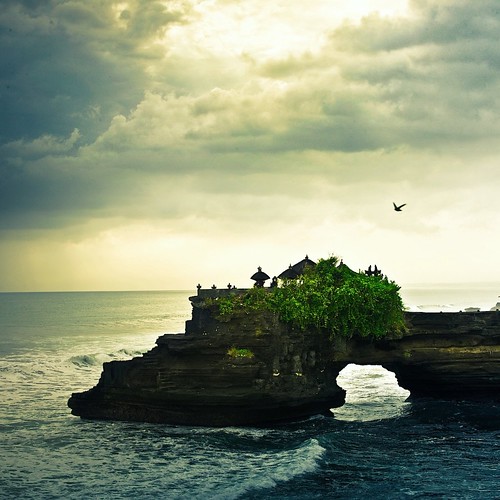
Photo Credit: celtics baby clothes
A great way to earn money and learn a lot in the internet is participating in stock photography. Stock photography has been around for a while. And there are a lot of great stock sites that sell photographs for a reasonable price.
Just how and what should you shoot to be able to participate in stock photography?
Photographers say you should start with the concept. But the very first thing you should do is to know your equipment. I literally spent ten times more time trying to know how my camera works than thinking of something to shoot.
Stock photography is a very demanding industry. It's as close as you'll get to professional photography. It requires you to be able to produce images of the highest quality. That is because this industry is very competitive.
Try shooting the same subject with different settings. You should know how your camera reacts with different kinds of light. You should also know how it responds to different levels of illumination. Note the differences you see and keep them in mind.
Next you need a concept. Your images should present an idea, a thought or an expression. Consider a photograph of a man typing on a computer. What is he doing? Why is he typing? Is he working? Is he Blogging? Or just playing?
Designers buy stock images because of the concept they present - not because they look good. Stock photos are used in web sites, brochures, magazines, publications, advertisements, and almost anything that has a print.
So you need to have an image that has a concept that satisfies the needs of the would-be buyers of your pictures.
Then, you need a lot of light. Stock photos require that images have the right level of illumination and contrast. They need to be clear. If you can't afford a big set-up, you can always use desk lamps or even the sun.
You'll also need a computer and two kinds of programs: noise reduction tool and a photo editing application. Most stock photographs go through a noise reduction process. They also get a little tweaking in color, contrast and brightness.
Stock photographs need to be as close to perfect as possible. It's like what they say in the computer graphics industry: "it does not matter how you do it as long as you get the job done." Don't think that editing a photo in your pc is cheating. That only goes for journalism.
The next is pretty simple. You need a stock agency to upload your images to. Or you can showcase your work in your own site. Uploading in stock agencies is better. That is because you can find out where and how to improve. Use their powerful community to find out your weakness and strengths as a photographer.
Then when you have all this, what you need to do next is to be consistent and improve and improve and improve. You need to keep up with the ever demanding industries. If you don't, you'll get left behind.
Using Depth of Field for Photography

photo source
It's one of the greatest tools available to photographers, it's easy to use, and yet it's among the least known and used abilities of a camera today. Pro photographers have used it for decades, but the amateur can use these same techniques without paying the professional price. It's called depth of field, and it's accessed through the use of the aperture.
The aperture, simply put, is the hole that light comes through in your camera. Light passes through the front of the lens, through a series of glass pieces, through a hole at the back of the lens, and into the camera. The aperture is the hole in the back of the lens, and you get to control this vital part of the camera, if you decide to want to bump up your pictures. You can place the camera on auto, and the camera will adjust its aperture, shutter and more to the situation it sees. By placing the camera in more manual modes, you take on powerful and personal control, and YOU get to decide what you want to create with your photographs.
An important factor here is lighting. Any photography relies heavily on the lighting that you are using, whether it be from the natural, ambient light around you, or artificial light, like a strobe or other flash unit. Especially while using natural light, it will be important to use a tripod to keep the camera steady while shooting. If you are shooting on a cloudy day, without much light, then the camera must compensate for less light by having a longer shutter speed, which it will do automatically in the mode I'll be explaining in a moment. A longer shutter speed means the camera won't be able to have a clearly focused picture without the use of the tripod.
Depth of field simply means the area of focus, or the area in the picture that is in focus might be a more accurate term. Photography is a two dimensional medium, having height and width, but it lacks depth, the third dimension. Your photography can create the illusion of that depth through a few easy camera settings. You may be asking yourself, why would I want to create the illusion of depth, and what is it good for? Part of the reason is to create a sense of emphasis. When you take a picture of a large area, with trees, birds, squirrels, people, rocks, etc, what is the thing or object that you are zeroing in on? Is there anything that you really want to emphasize to your viewer? If so, it's probably getting lost in the crowd of other things on the scene. The squirrels are so small you can barely see them, the people are walking their dogs, and the trees are swaying in the breeze. But what if you wanted to focus on the viewer on the flowers in the garden? When you create emphasis on an object, it strengthens your photo, and actually guides the eye of the viewer to that object. You could take pictures to create a story about that, as you can read in my article about photo stories. When you get in to take close-ups of the flowers is where the possibilities of great photography begin.
Emphasize the garden by focusing in on one or two flowers at a time. Grab a tripod, get down to eye level with them, and then get ready. Place your camera in a mode that allows you to change your aperture; the mode is usually called "A", or "AV" on some models. Film cameras can allow these changes too, on SLR models. They require you to simply change the f-stop manually on the aperture ring. On your digital camera, use your selector buttons to change your aperture. You'll see on your digital camera, most likely, a letter f, with the number on the readout on either the monitor, or the info panel on the top of the camera, or perhaps both areas. The f means f-stop, which is the name commonly used to describe the number of the aperture setting. The best way to emphasize a flower is to have only that flower in focus, and to have the rest out of focus. Change your aperture to a really low number, such as 2.8, 4, or 5.6. When the lens is at a low number like this, the lens hole is wide open, but it is creating a small area or depth of field; basically an inch or two will be in focus. Focus your camera, and shoot. Now, look at the camera, and look at your pictures. The one or two flowers should be in focus, but do you see how the background is fuzzy and out of focus? This is what is called a "shallow depth of field", and that comes from using a small number f-stop. That's because you've taken control of your camera, and changed the outcome! Because only the flower is in focus, and the rest is blurred out, you have guided your viewer to what YOU want to emphasize! You have used one of the most powerful tools available for a photographer to bring a new focus to your pictures. Try this with a lot of different scenes; look how the item is forced to really stand out for you because it's the only thing in focus.
Now, on the opposite end of the spectrum are the pictures that have the entire photograph in focus; such as a lighthouse standing out from the beach, with horseshoe crab shells in the immediate foreground. This is also done by changing the depth of field of your camera. Here, you again change your aperture, but this time place it on a high number like 16, 22, 28, etc. This is to create a large depth of field by using a small hole in the back of the lens. Again, you must use a tripod to keep the camera steady. Take a picture with something in the near foreground, such as a rock or the crab shells, and then compose your picture with a mountain or some other object some distance away, focus, and shoot. Remember to use the rule of thirds here for additional emphasis. As you'll see, both areas should be in focus, again showing the third dimension and creating the illusion of depth. This is a large depth of field.
It's a little known tool in the photographer's toolbox, but almost any camera made in the past four years will have some sort of ability to work with depth of field, whether they have a point and shoot or DSLR. Every photographer, of every level, has the ability, through practice, to create beautiful photographs that can rival those of the pros, by using the tools available with every camera. Use the strength of depth of field when you create the third dimension in your photographs, and add a new and incredibly
powerful personal dimension to your photography.
Saturday, February 26, 2011
Budget Winter Wedding Photography Guide

source,credit
Do-it-yourself wedding photography is an excellent way to save money, but it is important to plan the details. Chances are you probably know a few photography buffs who are willing to help with your wedding photos. Use this guide to make the most of their skills and generosity to get beautiful wedding pictures.
1. Recruit multiple friends or family members to help with the photographs.
Designating multiple people as photographer splits the workload and means the wedding pictures will reflect a variety of perspectives. Choose knowledgeable, reliable people who are experienced in digital photography.
2. Use a high quality camera.
Make sure the camera you choose is technologically capable of capturing your winter wedding memories. Varying lighting conditions and action scenes are no problem for a good digital camera.
3. Have backup batteries or a backup camera ready.
Be sure the camera you use is charged and have a backup battery or backup camera ready.
4. Bring extra memory cards.
With digital cameras, most people take a few photos then delete the bad ones. The quick pace of a wedding probably will not leave time to edit along the way. Besides, pictures that are out of focus or unusual often have a unique beauty that is not immediately apparent. Bring extra memory cards to avoid missing a good shot.
5. Be very clear about what you want.
Research online and browse friend's wedding albums to get an idea of the type of poses and moments you want to commemorate. Make a list to be absolutely certain each milestone is photographed.
6. Get a mix of candid and posed shots.
A variety of photos best captures the spirit of the day.
7. Plan for the weather.
Depending on the wedding location, winter weather may mean it is too frigid to venture outdoors for a photo session. Plan to take group shots of the bridal party and family members indoors.
8. Edit the photos.
Try cropping and adding different special effects. Sepia and black and white pictures take on an elegant, timeless quality.
9. Order quality photo prints.
Since you saved so much on the cost of a photographer, invest in prints that use high quality paper and ink.
10. Make a wedding album.
You can use traditional photo prints to make a wedding album, but digital photos give you more options. A variety of book options, including hardbound books and small flipbooks, are available online and in many drug and discount stores.